Localized repair
Best suited to an isolated failure when surrounding materials remain compatible and serviceable.
Proudly serving Charlotte and nearby communities
Clear findings, practical repair options, documented work, and a written scope before the project begins.
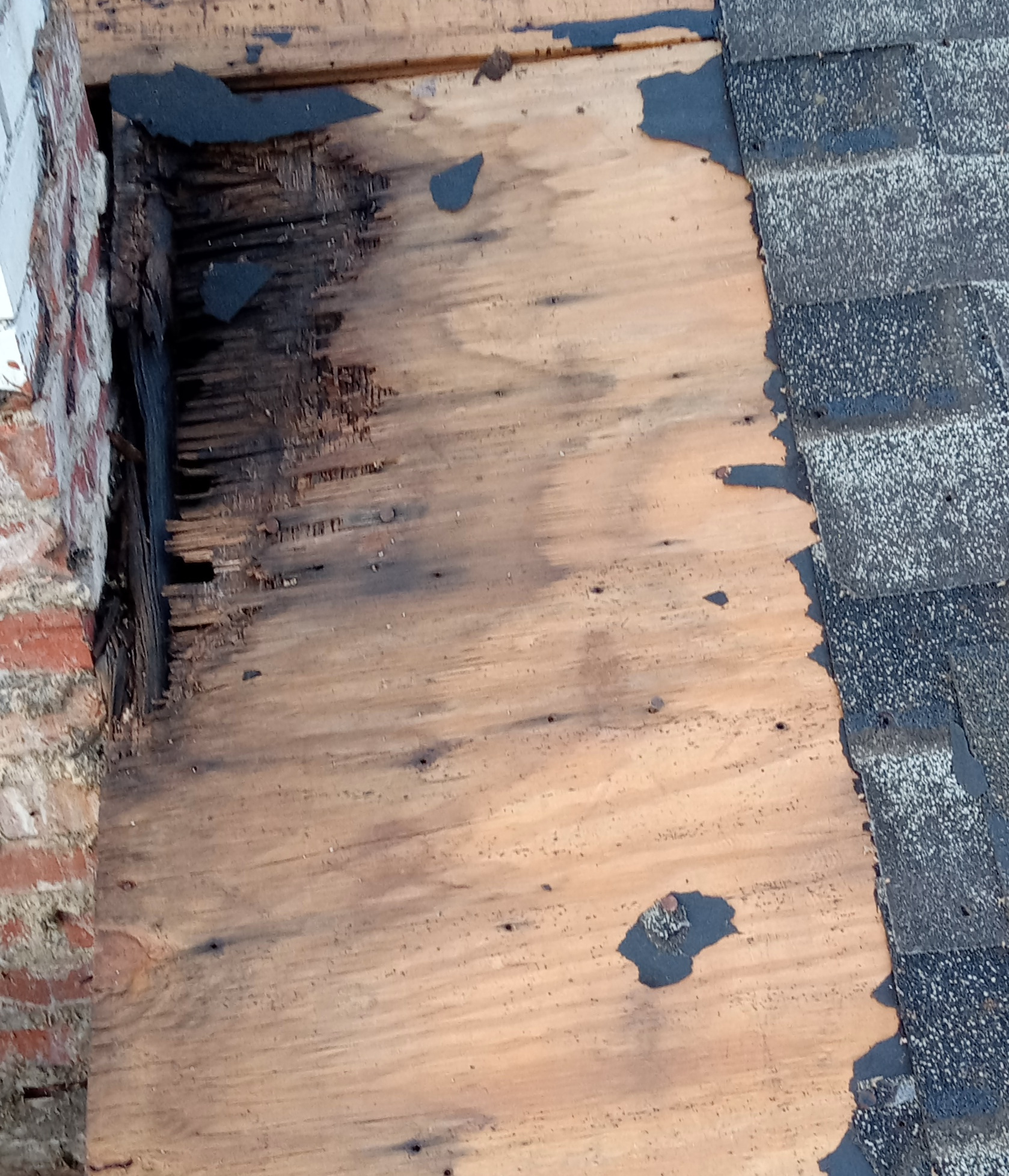 Field documentation: concealed deck deterioration
Small symptoms can conceal a larger water path
A ceiling mark can be several feet from the entry point. Water may travel along decking, framing, underlayment, or a penetration before it becomes visible indoors.
A useful inspection starts with evidence, traces the likely path, checks adjacent components, and measures the correction instead of assuming the first visible defect is the whole problem.
Learn how roof leaks are tracedRepair or replacement
Localized defects on a serviceable roof may support repair. Broad wear, brittle materials, repeated leaks, or concealed damage may make a larger scope more dependable.
Three reasons to request an inspection
Wind displacement, exposed fasteners, cracked flashing, or failed boots can interrupt the water-shedding surface.
Review shingle warning signs
Darkened wood, delamination, sagging, musty insulation, or repeated stains point to a problem that needs tracing.
Understand decking damage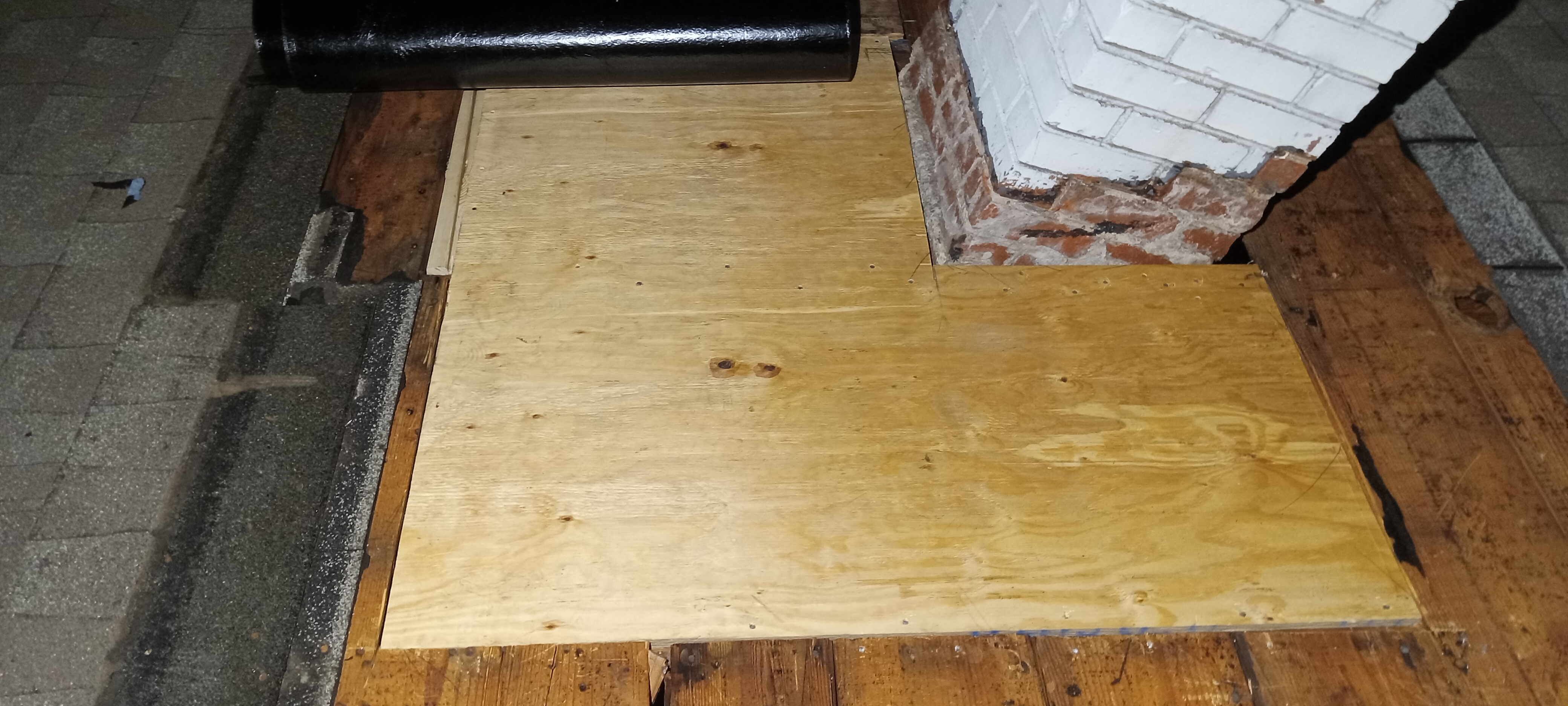
Clogs, poor pitch, short downspouts, broken drain lines, and unsuitable discharge areas can send roof water back toward the structure.
Follow the drainage pathCharlotte, NC residential roofing + drainage
A practical, source-backed field guide to the roof components, water paths, warning signs, repair choices, and planning ranges homeowners ask about most.
How to use this guide
Roof leaks rarely appear directly below the point where water enters. This guide organizes the roof covering, flashing, ventilation, gutter, and site-drainage components that most often need inspection, repair, cleaning, or replacement in and around Charlotte.
Pricing is a planning range based on current Charlotte-area published data and contractor market references. It is not a bid. Hidden damage, access, safety, permits, material matching, and restoration work can change the final scope.
Fix it Fast CLT project documentation
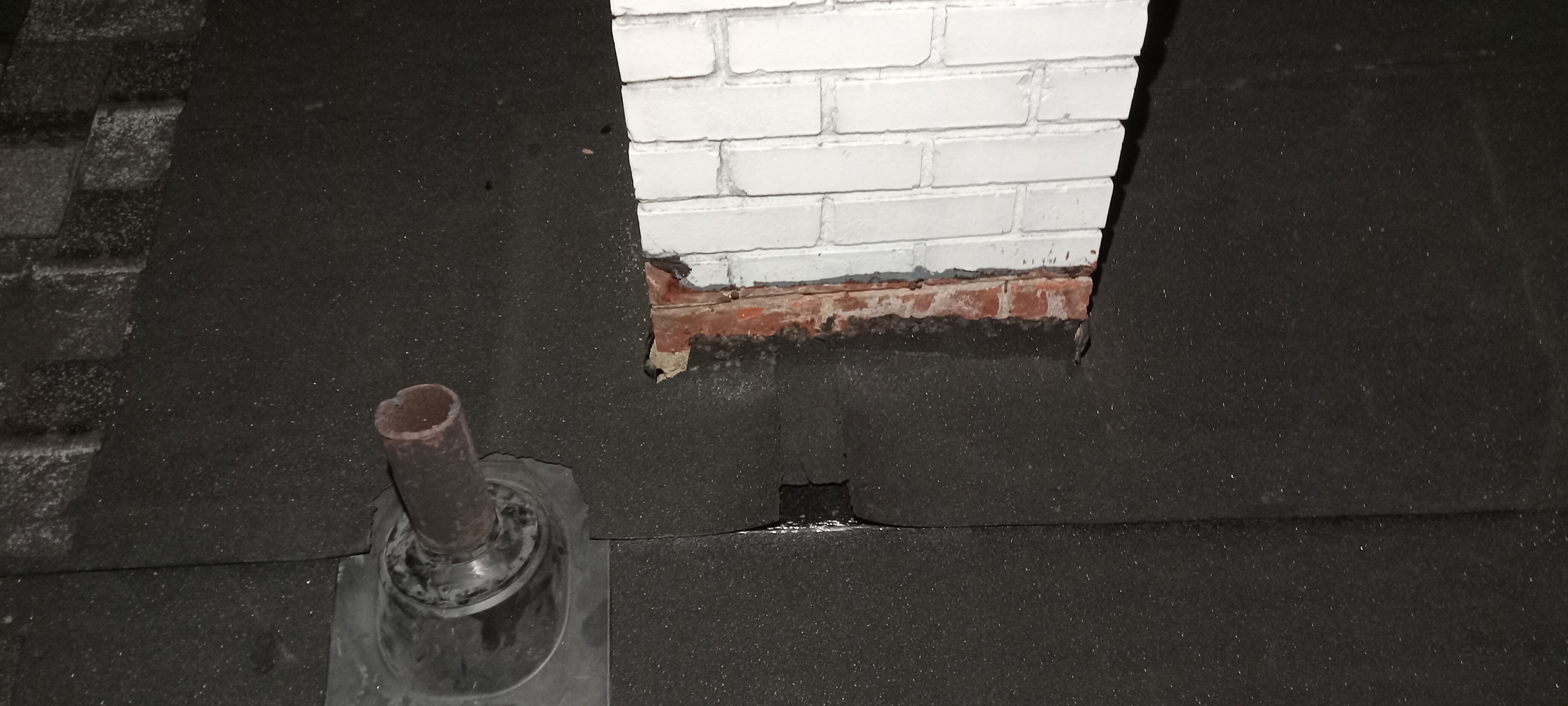
These photos show distinct stages of a chimney-area leak repair: concealed deterioration, new sheathing, and a water-resistant dry-in layer before the finished roof covering and flashing work.
Searchable knowledge base
Priority topics reflect recurring homeowner search intent and common repair categories. Exact search-volume rankings vary by tool and date; this page does not present a fabricated keyword-volume claim.
Professional inspection lens
The useful deliverable is not a list of scary defects. It is a documented path from observed condition to probable water entry, recommended correction, unit, quantity, and warranty boundary.
Review weather, access, roof pitch, electrical hazards, ladder locations, and whether a walk-on inspection is appropriate. A homeowner walkaround should stay at ground level or use a safe balcony/viewpoint.
Compare interior stains with attic evidence, then inspect penetrations, valleys, wall lines, edges, gutters, and drainage discharge. Record uncertainty when a leak cannot be reproduced.
Use squares for roof area, linear feet for edges/gutters/drainage runs, each for penetrations and boxes, sheets or square feet for decking, and labor or mobilization where access drives the job.
Separate maintenance, localized repair, partial replacement, and full replacement. State assumptions, exclusions, permit checks, materials, cleanup, and the workmanship warranty in the same written scope.
How professionals price
Most estimates combine a measured production unit with mobilization, labor, material, disposal, safety, and access allowances.
One roofing square is 100 square feet. Field shingles, underlayment, tear-off, ridge caps, valleys, and decking are typically measured by square, square foot, linear foot, sheet, or each.
Gutters, downspouts, buried pipe, French drains, and trench drains are commonly measured by linear foot. Catch basins, cleanouts, emitters, pumps, and grates are each.
Inspections and gutter cleaning may be a minimum service call, per linear foot, or a maintenance plan. Two-story access, steep pitch, heavy debris, and disposal can move the range.
Research trail
Reviewed July 13, 2026. Official code and local government sources are used for requirements and drainage guidance; current market sources are used only for planning ranges.
Local help, without pressure
Fix it Fast CLT can arrange a qualified technician to discuss an inspection, maintenance question, repair, or replacement and provide a written estimate valid for at least 14 days from creation. Project-specific written terms can include code-compliant workmanship and leak-free coverage, typically 2-7 years depending on the work, with transfer terms stated in the agreement.
Phone hours: Monday-Friday, 9:30 AM-5:00 PM; Saturday, 11:00 AM-2:00 PM; closed federally recognized holidays.